Showing posts with label science education. Show all posts

Thursday, August 8, 2019

Another memorable day, 8/8/88 (and more)...

Hi, again. August 8 is a date that is very important for me in many ways. I will share 3 examples.

After my freshman year at SUNY Oneonta in 1973-74, I returned home to the sticks outside of Port Jervis, NY, to the summer job as a sheet metal worker in my dad's factory, across the street from the house he bought when he moved us from Katonah. The summer before he and I and a couple of other unfortunate souls took a dairy cow barn and ripped everything out and turned it into the sheet metal factory he moved from the old Con Ed building in Peekskill to little old Greenville.

On August 8, 1974, I quit that job after another one of our blow-ups (#politics - I was 19 and no fan of our president; Nixon would resign the presidency the next day; he was a George Wallace supporter in '72). I decided to drive over to Otisville to "hang out" and perhaps go to the Bev for a meatball on end. I ran into Donna outside of Cinotti's, and asked her what she was doing. "Nothing." We'd dated for quite a bit of our senior year in high school (a new school for both of us), and kept in touch and even continued seeing each other during 73-74, but the relationship had soured. I don't remember why; perhaps I was still a teenage jerk then, too. And a geek.

Since I'd blown my chance to have Mom & Dad help me to pay for my sophomore year, and was now on my own, I was determined to head up to Oneonta to find my next place before they were all gone. On the spur of the moment, I thought about it and I asked Donna to move up to Oneonta with me. Totally spontaneous and unplanned. One of those Yogi forks in the road. My life was changed forever. We moved into a trailer park on Goodyear Lake, the road to Cooperstown. The trailer was (I kid you not) 8' x 32'. It had a short in it. Our Alaskan Malamute, Lady, went into heat that August, and we had no AC, and the screen door let just a little of the hot air out of that oven, but each male dog that came nosing around got a shock when his wet nose touched the screen. Winning! However after 3 weeks we finally got into our new trailer after begging the landlord - this one was a whopping 10 x 55! We spent the rest of '74 in there, some 45 years ago now, and were married the next spring. After moves to Los Angeles, Corvallis, Bryan/College Station, Tallahassee, Omaha, Texas, Tallahassee, Houston, Tallahassee, Hartford, and now, Eugene - she still stays with me and I'm over the moon with love for her, and the adventures we've shared with all of our kids. In any case, that chance moment and decision changed my life forever. We're still married, after getting hitched in the spring of '75 at my family's home, Fort Van Tuyl, built and occupied in 1771 by the John Van Tuyl family, and undoubtedly one of the seats of resistance to the Tories by Dutch and English alike.

Fort Van Tuyl, now known as Fort Van Tyle, in Town of Greenville, outside of Port Jervis, NY; photo taken in September 2017, my last visit there.

Number 2: 8/8/88 - should be symbolic of some good fortune according to Chinese philosophy, I believe. In any case, this was the start date on my contract as a newly minted Assistant Professor of Meteorology at Florida State University. I worked there for a total of 25 years (including an earlier stint as a Visiting Assistant Professor, pre-PhD). I had also taught a year at Creighton and a year at Texas A&M, after TA duties at UCLA and Oregon State, and as lead instructor for two courses at OSU, too. I had great and sad moments in Tallahassee, but earned tenure (but promotion the year before - still can't quite figure that one out...) and did some solid work in research, outreach, teaching, and leadership. I think.

And the final one - 8/8/17 - yes two years ago today. This is the day I returned to work after a 1 week rehabilitation hiatus after the violent strong-arm robbery that took place the evening of 7/31/17 at my pharmacy, when I was victimized by the thieves, beaten and pepper-sprayed and beaten again (why did I get up?). At the ER the next day (the first of 3 visits from 8/1 to 8/8), I was told I likely had a concussion, and that has changed my life, too, as I've had several bouts of disability, including a 10 month stretch of no to less-than-half-time work and occasional problems that continue. I was 62 at the time, and old brains in old athletes don't heal nearly as quickly as young ones. Nevertheless my TBI/concussion gave me much respect for those who are victims of them, either in sport, accidents, attacks, etc. I will beat this, and thanks to my family, friends, and colleagues, I'm nearly back. Fortunately, my boss waited until my first day back full time to add 3 new programs to my duties as Science Dean. (bonus anniversary - 8/8/19) I just submitted 3 abstracts for the #AMS100 anniversary meeting. Can't wait to get to Boston in January to see everyone I've met in the 44 years since I've been an @ametsoc member, and husband!

Bye for now...1st one was great! 2nd one had ups and downs. 3rd one is the toughest, but I'm determined. Happy Anniversary, and I hope to celebrate in Boston with many of you in January!

Paul Ruscher • 8 August 2019

Sunday, June 2, 2019

Anniversaries

On the importance of anniversaries

Humans are inclined to commemorate important life events; I’m no different. In fact, I have (at least) two very important ones coming up for me. One is a 50th, one is a 7th, and one I won’t reveal until the end.


As I was finishing the eighth grade in New York at John Jay Junior High School in Cross River 50 years ago this week, I was contemplating what to take in high school to further my long-term goal of becoming a Meteorologist, a goal which had begun on a Cape Cod vacation during Hurricane Donna in 1960. My guidance counselors knew next to nothing about science (that apparently has not changed much in many schools in the nation). I typed a letter and mailed it to the American Meteorological Society and received a very helpful reply (in the mail, still an important communication tool in those days) on becoming a meteorologist. In their brochure, which I probably still have somewhere (you’ll know what I mean if you’ve ever been in my office at home or work), recommended a course of study, and even a list of college programs that offered it. That was ½-way in to the storied history of #ametsoc, and I’m proud to be a long-time member and Fellow of that organization. I’ll see you in Boston in January for #AMS100!   

The second anniversary I want to commemorate here is the anniversary of the decision that would help the mark my departure from Florida State University and enter the world of community colleges. By 2011, I had telegraphed to my departmental and college administration (new Chair and Dean) my intent to retire soon to pursue other professional endeavors; I had stopped taking on graduate students and new undergraduates in my lab; they did not believe me, and I did not know quite what the future would bring, but I knew I had had enough of living in North Florida and working at an R1 institution which did not value (as much) the things that attracted me to pursue a career in higher education to begin with (e.g., teaching, equity, community engagement and outreach, integrity). I had long yearned to return to Oregon, where I lived for eight years while I pursued my graduate degrees and a postdoc. It is about this time that two important events also conspired to occur, which would present to me an important fork in the road ahead (always welcome, and sought, thanks to my  personal guru, Yogi Berra). 

The first was an invitation to participate in a transformational fellowship program run by the Society of Environmental Journalists (#SEJ) in partnership with the Knight Center for environmental journalism at Michigan State University. I was one of 24 scientists and 24 science journalists who would be brought together for a three day workshop in Cleveland on the banks of Lake Erie to examine how our communities could (and should) better speak to each other to inform the public about the science behind climate change. 

Up to that point, many climate scientists and journalists were doing some great work, but there were also many examples of very poor #scicomm, and I credit the organizers of that key meeting in Cleveland to helping a few dozen of us to engage in something that was truly inspirational. For a while, I guess, I was a reliable source for some journalists in Florida. But thankfully others who are much more active in climate science research and writing have stepped up in the last decade, and done great work. A great introduction to that work can be found all over Twitter and in blogs, not to speak of the peer-reviewed literature. Although that workshop was transformational for me personally (and not just because of the simultaneous three-story Grateful Dead exhibit at the Rock & Roll Hall of Fame next door), it is not the most important aspect of this anniversary. That’s because, while I waited in the Akron airport for my flight home, I received a phone call from my future boss, offering me the opportunity to interview for the position of lead instructor in Earth & Environmental Sciences at Lane Community College in Eugene, where I still work today, only now serving as Science Dean. Many of my colleagues in Tallahassee were flabbergasted that I was really leaving, and in particular moving to Oregon!?

In leaving behind one university after working there for 25 years, and going to a community college, which is a type of place where my wife and all of my college-bound kids started their higher education (thank you, Linn-Benton Community College and Tallahassee Community College!), I rediscovered my passion for education. In doing so, I also apparently moved from the state which has increased its investment in higher education the least over the past 20 years (Florida) to the state which is ranked 49th in that metric, Oregon (have to work harder on that one). However in spite of all of the positive things that I accomplished on behalf of my former department, institution and colleagues and students at FSU Meteorology (now a part of FSU EOAS), I think I’ve made a bigger impact here at Lane, and it has made a bigger impact on me in these 7 years.

By that I mean in particular the staff & faculty of the Science Division, who I worked with initially as colleagues. Technically and practically, I now manage them, but almost to a person the individuals in my division have the backs of our students and each other, and I’m proud to be contemplating what I believe will be the last job I’ve ever have. You see, at Lane, and at community colleges across this nation, the role of institutions like this is to provide opportunities for those whose fortunes do not necessarily offer access into higher education without substantial assistance — those who suffer from the influence of drugs, societal injustices, extended family pressures not to mention the proliferation of underrepresented populations within some of the most desirable careers in #STEM, including the health professions. The Lane students I've encountered work hard here and at life in general; nothing got handed to them.

I remain committed to that promise of equity to all and am now working at a place where, theoretically, that should exist. But Oregon must address improved access to these places, and that requires investments. These investments must recognize the contributions and sacrifices of employees and students from the past, developing the institutions into community-serving ones that launch enterprise, careers, and growth. They must also recognize that transformation is happening much more quickly in a global economy, and that society is asking institutions to be more resilient and nimble at the same time, and accountable for what little public money is invested. Not an easy thing at all! 

And now, its’ time for the last one. (You forgot that I had a 3rd one, didn’t you?) This week I will enter my 65th year as a human being (birthdays are named by the last day of that year!). It historically is also a number that represents a time to consider retirement. Also heating and cooling degree days (geek). I will be 65 when the 2020 Presidential election occurs. I was 21 in 1976, my first presidential election, and it was an exciting time to be a senior science major in college, taking also history and political science courses, post-Watergate, during the election cycle. It wasn’t as scary then as some paint things now, because the Vietnam debacle had ended, as had the Nixon presidency. But these times and 2020 do give me anxiety, in terms of the determined anti-scientific agenda of today’s administration and their #GOP enablers, particularly in the US Senate, which also spills over into a zealous favoritism of a single religious viewpoint couching all policy decisions. I look forward to the next year with both trepidation and hope, and am so proud of the young among us who are in many cases leading the fights for a sound environmental future, civil rights for all, and gun safety. They are taking on this fight because it will impact them. We’ve screwed up enough things for them. It is time to pass the baton; I'm optimistic that their energy, enthusiasm, and integrity will turn things around for humanity.

In the meantime, I continue to volunteer to help out where I think I can, occasionally offering local professional development through the GLOBE program, and advising the Oregon Department of Education (ODE) and the Lane Regional Air Pollution Agency, LRAPA. But I know that in the long run these efforts will pale compared to those contributed by young women named Malala, Kelsey, Emma, Alexandria, and Greta, and so many others.

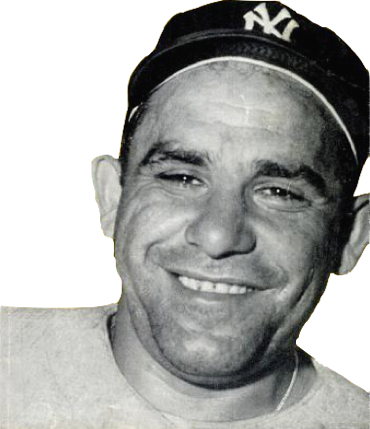
Photograph of Yogi Berra courtesy of Wikimedia Commons; public domain image.

Education investment statistic reported in 2019 public talks by Oregon’s Education Commissioner, Colt Gill. 

Published 2 June 2019, slight revisions 3 June, Eugene, Oregon, USA, © Paul Ruscher.

This work is licensed under a Creative Commons Attribution-NoDerivatives 4.0 International License.

Saturday, March 3, 2018

High School, Science Class, and the AP Exams - Wherefore art though, Earth Sciences?

It is a commonly-held claim that for individuals today to succeed, high school graduation followed by college-level attainment of a degree (or at least career-technical certification) is the path to economic success, as well as a useful pathway into adulthood and society. I won't belabor these claims at this point with reams of evidence. I do wish to take issue with the poor implementation of science in many secondary institutions, as evidenced by state teacher licensure requirements, state testing considerations (particularly for high school students), and inequities in the offering and availability of AP exams, in particular. I do this not to lay blame, but to ask if the status quo is adequate, as we look forward.

The National Science Education Standards, finalized in 1996, formed the basis for a period of reform which resulted in massive changes to standards-based education across the states, including an effort involving yours truly as well as many fine scientists and science educators in Florida. Why, we even got evolution and climate change into the state standards in Florida by 2008, much to the chagrin of organized conservative efforts which are still fighting to remove science-driven teaching from some of the classrooms, thanks to ridiculous bills that have become law in Florida and elsewhere (one such bill is 2017's HB 989) or this year's anti-science bill. If you are interested in such things, Florida Citizens for Science and the National Center for Science Education have lots of material available. In Florida in particular, Brandon Haught has an excellent blog that covers science education and exposes anti-science education attempts. He could use some support!
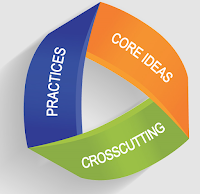
cross-cutting practices, core discipline ideas graphicWith efforts to improve fundamental literacy for our public school students, came the Common Core, and soon an organization called Achieve worked organically with many state partners to develop the Next Generation Science Standards, or #NGSS, which could provide a useful framework for science instructional practice from K-12. These standards amplified and clarified the goals of science education and defined a three-dimensional approach to science education that included disciplinary core ideas, cross-cutting concepts, and science and engineering practices.
They are a phenomenal change and paradigm shift, now adopted by some 19 states and the District of Columbia, including my own, Oregon (disclosure: I served on the state adoption panel and am now a member of the implementation panel for the Oregon Department of Education).

These standards call out (again, as did NSES) new standards among the disciplinary core principles that include a measured balance of material in three major areas: earth and space science, life science, and physical science. Stop for a moment. No biology? No chemistry? No physics? [Not really, keep reading.] Radical idea! Rather, the physical sciences include chemistry and physics; the life sciences include biology, microbiology, and anatomy and physiology. Earth science is finally given its due (a nod came out of NSES but was brushed off in most states), combined with space science. This creates a fundamental problem for states or districts which do not offer earth science or do not have well qualified teachers, or do not even have an ability to have a credential in earth science. Integrated science may suffice, but that usually entails a requirement (for teacher licensure) of only one or two lower division core classes in one of the earth sciences (geology, pedology, climatology, meteorology, hydrology, oceanography, ...) along with a core in more advanced biology, chemistry, or physics classes. That ought to be good enough, right? Well, no. But that is a dead horse I'll jump on another day.

A real problem lies with the expectation that high school students will earn college credit in high school, and the requirement in some states that all students must at least attempt such credits. These can be awarded by participating in International Baccaulaureate (IB) programs, Advanced Placement (AP) classes, sponsored dual-credit with area colleges, or actual college classes taught on their high school campuses. I'll concentrate on AP here, because there is a national standard, and passing scores result in awarding of college credits, based on completion of a high school class and an AP test. Scores go from 1 to 5, and credit is usually awarded for achievement at 3 or higher, determined by states or individual colleges or collectives. Are these credits functionally equivalent to college classes? Do they serve a useful purpose for students in terms of assuring success in college, or quickening that experience for them? In science there is a distinct problem.

The NGSS has provided a paradigm shift in science education for K-12 that includes changing practices as well as changing emphases. Among the changes are the shift from traditional core science classes, biology, chemistry, and physics (although physics is often given short shrift), to one which fits a redefinition I've already addressed above. If one examines the options for students to earn science credit in high school, and the quantitative aspects that occur with it, we find Table 1. I have selected a community college in Oregon (my own), my graduate alma mater (Oregon State University), a smaller liberal arts institution (SUNY Oneonta, my undergraduate alma mater) and a major southeastern Research I university (Florida State University) where I spent much of my time as a professor.

Each of the classes listed on each row of the table is designed as a full-year course, equivalent to one high school credit. These classes may in fact be taught in different ways at different schools, but the credits assigned when achievement goals are reached are quite different; there are fairly universal standards required if a school offers AP options. In nearly every case examined, and in different states, there are two conclusions that relate to NGSS and modern science education practices. There is no way to earn college credit in Earth Sciences, and the amount of credit awarded to Environmental Sciences is far less than those for other science classes, and usually is associated with a non-laboratory science. This disincentive to even offer earth or environmental sciences as an important, quantitative, rich science class is a barrier to students becoming exposed to this material, and potentially opening them to make college choices based on programs that exist to further their own educational objectives. Scholarly work published in journals of the National Science Teacher's Association, National Earth Science Teachers Association, and National Association of Geoscience Teachers, to name a few, report high levels of student satisfaction and engagement with geoscience material. As an example, there are approximately 100 institutions in the United States that offer undergraduate degree programs or options in meteorology, and hundreds more that offer programs in earth sciences with a geology focus. Programs which focus on the hydrosphere (hydrology and oceanography) are fewer in number, but many institutions with graduate programs in all of these areas may have outreach, internship, or research opportunities that can attract students to them, facilitating a hands-on or almost clinical approach to these sciences that help students succeed.

I am advocating here for a rethink on credits awarded. My opinion is that students who take AP science exams are getting too much college credit, and they are also missing out on college credit opportunities because Earth and environmental science options are limited or missing. 

In Biology, Chemistry, and Physics, students who pass a single exam after taking a full term or full year class can earn credits equivalent to a full one year sequence, the equivalent of as much as 1/6 of the entire associate's degree (15 credits out of 90 for the AA). In Environmental Science, however, only one course is awarded at that credit level, and in earth science, there is no credit possible. For years, schools have struggled with how to treat environmental or earth sciences, particularly in states where no instructional endorsement is available, or in smaller rural districts where finding well-qualified teachers in multiple disciplines is particularly harsh. The problems facing those who champion physics education, certainly a foundational aspect of a desirable high school curriculum, are further magnified when it comes to earth and environmental sciences. Similarly, liberal arts non-science classes typically do not bestow credit equivalent to 1/6 of an Associate's degree.

In many instances, earth science is taught and relegated to those students who are deemed not to be college-bound, if it is offered at all. In my own case, I was an honors high school student in New York (decades ago) who was not given a chance to take earth science, even though I wanted to. Guidance counselors at the time moved freshmen students with "low achievement" in middle school into the freshman earth science class - it was not open to advanced students. I had to take anatomy and physiology as my 4th high school science class. It was ok, but didn't help me formulate a better understanding of options in earth sciences. Even in admissions decision-making, earth science or environmental science classes sometimes (often?) do not "count" as laboratory sciences, while the traditional "big-3" do, regardless of what the nature of the science class (or lab, if available) is at the high school attended. The landscape imagined in NGSS demands that disciplinary core ideas provide some structure and framework for how to reimagine science instruction. At the high school level, there are many options (see the Appendix K examples in NGSS, for example). But in analysis done by the Oregon Department of Education, there were 19 missing standards in the earth sciences, and another dozen or so in physical or life sciences, as Oregon moved from its earlier (2009) standards to full NGSS adoption.

Liberal Studies approaches to Science Education

Science electives are typically part of any BA or BS degree, and require students to complete a minimum of coursework in Mathematics and Science (usually at least one of the latter with a laboratory component). Courses like "Rocks for Jocks" and "Digging Dinosaurs" are commonly offered to meet the demand for this requirement, and they can be excellent options. But they also often can be deployed for mass audiences without opportunities for students to engage in real inquiry. That prompts a question:  What now for Earth Science?

Elective courses are available across the gamut - committed educators often taking on extra "preps" to make them work.  But commonly we also find:

  • Inadequate laboratory facilities to foster engagement
  • Inadequate understanding of earth science as a true "hard science" by college admissions and high school guidance counselors, and inadequate knowledge of career potential across the geosciences.
  • Key societal aspects of science implementation are foundational to earth sciences, including renewable energy, understanding of climate change, public health and environmental pollution, geophysical hazards, and even aspects of environmental justice. But teachers often state they don't feel like there is enough good material for them to use, or they would like to learn more about them so that they can deploy good methods in their own instructional practice.

What now for Environmental Science?

What an opportunity for an integrated science capstone course with aspects of life, physical and earth sciences! This could be a great 4th year of science course in high school. Imagine students becoming Data Scientists by mining data off government web sites, or measuring their own data and involving themselves in collaborative research, using past data gathered at their own local sites, or working with others across the GLOBE. That does prompt a shameless promotion to the GLOBE program, and its fine work including connectivity to NGSS.

A longtime colleagues (and lobbying mentor whose excellent blog Bridge to Tomorrow is linked here) from our 2006-2008 work, Paul Cottle, championed the notion that Florida needed to spend $100 million on teacher professional development to successfully deploy new standards in Florida. That proposal went nowhere, and the efforts to successfully implement instructional practices supported by research in science education continue to be thwarted in many states and districts. In addition, even in the states where changes are implemented, budgetary support is often lacking to institute the reforms. The problem is particularly stark in Oregon, the state with the lowest number of instructional hours per week in elementary science, and very poor laboratory facilities and dearth of well-qualified science teachers according to what NGSS is expecting.  Teacher preparedness for implementation of NGSS will require a seed change in deployment of funded and useful professional development for existing teachers, better certification options particularly for teachers of physics and Earth science, and effective professional learning communities that could work to implement practical and solid student opportunities across the sciences, including perhaps increased opportunity for high school students to earn college credit in real college-level science classes.

There are resources available if you are interested. Here are a few good ones from whom I've gleaned much good information over the years:
It is my hope that committed science educators will advocate for precious time and resources in their states and across the nation, and not just within their discipline organizations. As an earth scientist, it is insufficient to work within a narrow group of geoscience professional organizations, we must expand our work across the spectrum of science educators. The spreading of "alternative facts" informing our young minds is a corrupting influence on student understanding of how science works in fundamental ways.

3 March 2018 Paul Ruscher, PhD, FAMS, Eugene, OR

Opinions expressed here are attributable to me and not my employer or affiliated professional organizations.