Sunday, June 2, 2019

Anniversaries

On the importance of anniversaries

Humans are inclined to commemorate important life events; I’m no different. In fact, I have (at least) two very important ones coming up for me. One is a 50th, one is a 7th, and one I won’t reveal until the end.


As I was finishing the eighth grade in New York at John Jay Junior High School in Cross River 50 years ago this week, I was contemplating what to take in high school to further my long-term goal of becoming a Meteorologist, a goal which had begun on a Cape Cod vacation during Hurricane Donna in 1960. My guidance counselors knew next to nothing about science (that apparently has not changed much in many schools in the nation). I typed a letter and mailed it to the American Meteorological Society and received a very helpful reply (in the mail, still an important communication tool in those days) on becoming a meteorologist. In their brochure, which I probably still have somewhere (you’ll know what I mean if you’ve ever been in my office at home or work), recommended a course of study, and even a list of college programs that offered it. That was ½-way in to the storied history of #ametsoc, and I’m proud to be a long-time member and Fellow of that organization. I’ll see you in Boston in January for #AMS100!   

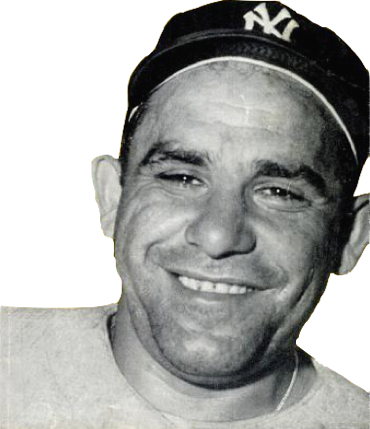
The second anniversary I want to commemorate here is the anniversary of the decision that would help the mark my departure from Florida State University and enter the world of community colleges. By 2011, I had telegraphed to my departmental and college administration (new Chair and Dean) my intent to retire soon to pursue other professional endeavors; I had stopped taking on graduate students and new undergraduates in my lab; they did not believe me, and I did not know quite what the future would bring, but I knew I had had enough of living in North Florida and working at an R1 institution which did not value (as much) the things that attracted me to pursue a career in higher education to begin with (e.g., teaching, equity, community engagement and outreach, integrity). I had long yearned to return to Oregon, where I lived for eight years while I pursued my graduate degrees and a postdoc. It is about this time that two important events also conspired to occur, which would present to me an important fork in the road ahead (always welcome, and sought, thanks to my  personal guru, Yogi Berra). 

The first was an invitation to participate in a transformational fellowship program run by the Society of Environmental Journalists (#SEJ) in partnership with the Knight Center for environmental journalism at Michigan State University. I was one of 24 scientists and 24 science journalists who would be brought together for a three day workshop in Cleveland on the banks of Lake Erie to examine how our communities could (and should) better speak to each other to inform the public about the science behind climate change. 

Up to that point, many climate scientists and journalists were doing some great work, but there were also many examples of very poor #scicomm, and I credit the organizers of that key meeting in Cleveland to helping a few dozen of us to engage in something that was truly inspirational. For a while, I guess, I was a reliable source for some journalists in Florida. But thankfully others who are much more active in climate science research and writing have stepped up in the last decade, and done great work. A great introduction to that work can be found all over Twitter and in blogs, not to speak of the peer-reviewed literature. Although that workshop was transformational for me personally (and not just because of the simultaneous three-story Grateful Dead exhibit at the Rock & Roll Hall of Fame next door), it is not the most important aspect of this anniversary. That’s because, while I waited in the Akron airport for my flight home, I received a phone call from my future boss, offering me the opportunity to interview for the position of lead instructor in Earth & Environmental Sciences at Lane Community College in Eugene, where I still work today, only now serving as Science Dean. Many of my colleagues in Tallahassee were flabbergasted that I was really leaving, and in particular moving to Oregon!?

In leaving behind one university after working there for 25 years, and going to a community college, which is a type of place where my wife and all of my college-bound kids started their higher education (thank you, Linn-Benton Community College and Tallahassee Community College!), I rediscovered my passion for education. In doing so, I also apparently moved from the state which has increased its investment in higher education the least over the past 20 years (Florida) to the state which is ranked 49th in that metric, Oregon (have to work harder on that one). However in spite of all of the positive things that I accomplished on behalf of my former department, institution and colleagues and students at FSU Meteorology (now a part of FSU EOAS), I think I’ve made a bigger impact here at Lane, and it has made a bigger impact on me in these 7 years.

By that I mean in particular the staff & faculty of the Science Division, who I worked with initially as colleagues. Technically and practically, I now manage them, but almost to a person the individuals in my division have the backs of our students and each other, and I’m proud to be contemplating what I believe will be the last job I’ve ever have. You see, at Lane, and at community colleges across this nation, the role of institutions like this is to provide opportunities for those whose fortunes do not necessarily offer access into higher education without substantial assistance — those who suffer from the influence of drugs, societal injustices, extended family pressures not to mention the proliferation of underrepresented populations within some of the most desirable careers in #STEM, including the health professions. The Lane students I've encountered work hard here and at life in general; nothing got handed to them.

I remain committed to that promise of equity to all and am now working at a place where, theoretically, that should exist. But Oregon must address improved access to these places, and that requires investments. These investments must recognize the contributions and sacrifices of employees and students from the past, developing the institutions into community-serving ones that launch enterprise, careers, and growth. They must also recognize that transformation is happening much more quickly in a global economy, and that society is asking institutions to be more resilient and nimble at the same time, and accountable for what little public money is invested. Not an easy thing at all! 

And now, its’ time for the last one. (You forgot that I had a 3rd one, didn’t you?) This week I will enter my 65th year as a human being (birthdays are named by the last day of that year!). It historically is also a number that represents a time to consider retirement. Also heating and cooling degree days (geek). I will be 65 when the 2020 Presidential election occurs. I was 21 in 1976, my first presidential election, and it was an exciting time to be a senior science major in college, taking also history and political science courses, post-Watergate, during the election cycle. It wasn’t as scary then as some paint things now, because the Vietnam debacle had ended, as had the Nixon presidency. But these times and 2020 do give me anxiety, in terms of the determined anti-scientific agenda of today’s administration and their #GOP enablers, particularly in the US Senate, which also spills over into a zealous favoritism of a single religious viewpoint couching all policy decisions. I look forward to the next year with both trepidation and hope, and am so proud of the young among us who are in many cases leading the fights for a sound environmental future, civil rights for all, and gun safety. They are taking on this fight because it will impact them. We’ve screwed up enough things for them. It is time to pass the baton; I'm optimistic that their energy, enthusiasm, and integrity will turn things around for humanity.

In the meantime, I continue to volunteer to help out where I think I can, occasionally offering local professional development through the GLOBE program, and advising the Oregon Department of Education (ODE) and the Lane Regional Air Pollution Agency, LRAPA. But I know that in the long run these efforts will pale compared to those contributed by young women named Malala, Kelsey, Emma, Alexandria, and Greta, and so many others.

Photograph of Yogi Berra courtesy of Wikimedia Commons; public domain image.

Education investment statistic reported in 2019 public talks by Oregon’s Education Commissioner, Colt Gill. 

Published 2 June 2019, slight revisions 3 June, Eugene, Oregon, USA, © Paul Ruscher.

This work is licensed under a Creative Commons Attribution-NoDerivatives 4.0 International License.

Saturday, May 25, 2019

The President and his Administration is in the news; this is a problem, America.

It's #MemorialDay Weekend and among the news items we find just this morning:


  • President considers pardoning convicted and accused military men who committed murder, atrocities, and #warcrimes
  • President's Agriculture Secretary to end an important #jobs program in natural resources, agriculture, and forestry
  • USDA removes 90% of domestic pork production from Federal #foodinspection requirements
  • President Trump will bypass Congress in awarding $8.1 billion to middle eastern government that is committing atrocities against civilians in #Yemen
  • President approves $28 billion in agricultural subsidies to US farmers in "#tariffrelief" measure, because of his beautiful tariffs which have caused economic disaster across industries and agriculture; included are over $60 million in subsidies to an allegedly corrupt Brazilian firm (whose CEOs are reportedly jailed) with ties to big business/political interests
  • President once again lauds himself as a #VeryStableGenius, not just a stable genius
  • President authorizes Attorney-General to broadly #declassify documents to continue his investigation of FBI and CIA "spying" on his campaign, potentially exposing intelligence sources close to Russian leadership
Just another #DayInAmerica. Thankfully, the #4thEstate continues to cover this news and shine a bright light on incompetency, self-preservation of economic power, and the #Courts are providing an incredibly powerful countermeasure to Presidential #overreach.

Tuesday, March 26, 2019

Where are you on the Spectrum?

The millimeter wave spectrum, that is? On the Ides of March (14 March, to be precise), the FCC initiated a giveaway, er, sale of government spectrum in the 24-30 GHz band that has already raised nearly $1 billion for the Treasury, far greater than the last sale conducted in 2018. The rub this time, is that spectrum being auctioned off is already presently occupied by important earth/atmosphere sensors using that bandwidth to remotely sense properties of the atmosphere to increase scientific understanding of the 4D evolution of these parameters. These are fundamental components of the World Weather Watch, which the US is party to, and contributes a great deal to increased understanding of the structure and evolution of things that cause major problems for citizens of Earth. You know, things like hurricanes, tornadoes, flooding events, winter storm events, and wildfires, dust storms, etc. The Capital Weather Gang at the Washington Post has been covering this issue, but there has been little coverage since the first day of the auction concluded.

That is, things that kill people with immediate devastation. They also are important for the environmental and climate monitoring functions for the US, particularly science-based agencies and the government and private sector functions that are impacted by weather and climate. Agencies such as the Department of Defense. Industries such as transportation, infrastructure maintenance, disaster preparedness and recovery, and recreation. The satellites are the sentinels in the sky and we geoscientists rely on their data to augment our understanding and enable us to get some measurements where no surface-based instruments exist (or could be maintained). Like over the nearly 70% of the earth's surface covered by water and also the ice caps, which are poorly observed, otherwise. Environmental change is happening faster than we'd like or have ever observed before, and these expensive instrument platforms could be completely neutered depending on 5G traffic, without interference protection.

The administrators of NOAA, NASA, and legislative committees in the science arena all had asked FCC Chair Ajit Pai to use his authority to not allow such a wide spectrum to be auctioned off, which would put science at risk, or to require a greater sensitivity threshold, but he did not see fit to say no to President Trump's desire to lead the world in 5G. As is so typical of this administration, FCC spokesperson Hart responded to the bipartisan leaders of the House science committee letter of 13 March with a flippant comment about only bringing up concern the day before the auction. Objections have been filed for months, with no one caring to respond to the concerns with anything other than a Nyet!

As pointed out in coverage in Science,

"A joint NASA/NOAA study had suggested that any noise should be limited to –50 decibel watts (dBW); the Europeans, for example, recently defined their noise threshold at –56 dBW. The FCC auction, however, would allow –20 dBW of noise, a significantly higher level, especially given its measure on a logarithmic scale. On 8 March, however, Pai rejected NASA and NOAA’s request and stated his intent to proceed with the auction."

Who cares, after all, if the US weather and climate monitoring agencies lose their ability to collect the data that cost so much to create in the form of new instrument development, launching them into space, and monitoring the health of the satellites that carry them? Anything that appears to boost the economy (and appearances may be deceiving) is full-speed-ahead in the Trump administration. Meanwhile, the lax interference standard is 4,000 times weaker than proposed by European regulators. [Aw, those Europeans!]

My view is that 4D should trump 5G; we need to maintain protection of the 23.4-24 GHz spectrum with a view towards more caution, not less, along the lines of those proposed, at least, by the commissioned NOAA-NASA joint study, at 50 dBW, if not 56 dBW.

From my point of view, by this stubborn action by Chair Pai, you can add the FCC to the EPA and the Department of Interior to agencies who are moving policy against what the science tells us. And that is the wrong direction. Dust off your quills, folks, they are more effective than torches and pitchforks, but it is time to get involved!

Tuesday, March 5, 2019

Why we still need a March for Science

The anti-science situation continues to get worse and worse, particularly with respect to #environmentaljustice (or injustice), and #climate and #environmental reverse actions from the present administration.

Now, more than ever. More than even in early 2017. This is a repost of my #MarchforScience address at the #Eugene rally at UO on Earth Day 2017. #ScienceNotSilence

If I can find the video from Facebook, I'll add that link in, too.


Sunday, February 3, 2019

How to adult. My journey.


{thread} 1/n I was raised by a father who turned out to be a racist. I loved him. But working in his sheet metal factory as a teen, I learned trust & respect from my coworkers in Tuckahoe, mostly African-Americans and Portuguese immigrants.

2/n I learned about the Holocaust in school, of course, but I understood the Holocaust through the lens of a German survivor of Hitler’s putsch, who limped permanently from a 1932 gunshot. He was the shop foreman.

3/n I learned about sexual abuse being in the Boy Scouts, after being assaulted there; that’s when I started realizing there were boys who liked boys. I was confused, but hated the individual, and the Scouts for doing nothing.

4/n I learned about religious teaching in Sunday school. Our attendance at the Presbyterian church suddenly was terminated after an anti-war sermon on US involvement in Vietnam. On to become a Methodist.

5/n I became a marksman in the Scouts. But never forgot what was happening all around me. I resolved to never pick up a gun again to point it at any human being. I did once have to shoot a rattlesnake once to save our ignorant (favorite) cat.

6/n I left the Scouts, the church, and became both politically and scientifically curious, and then active, in junior high. My science and history teachers had a lot to do with that. So did my mother, who cheered me on, mostly in private.

7/n In high school, I practiced not being racist, prejudiced. Met my first “nice” gay people and realized they are individuals and not serial assaulters. Black students were friends. People who were losing relatives to war.

8/n In college, I learned so much more, had Puerto Rican classmates and folks from all over. I thrived. But I wasn’t yet an adult even though I married my high school sweetheart at 19, some 43 years ago.

9/n We raised 14 children, through childbirth, adoption, fostering. Our kids and grandkids give us joy and love. I don’t understand racism except it seems like people get pigeon-holed by their experiences.

10/n Whether raised that way, or from a dramatic/traumatic event, labels get attached and imprinted. We need to not harden our hearts so much. Let go of our prejudices. Stop labeling people! 

11/n In graduate school, I lived in LA (Hollywood) for a year. I met my first queer/trans people. They were human, too. That same year, we had our first child. Family first, more important than a job. I was learning how to adult.

12/n In Oregon, finally after a year in LA, I began to better appreciate the environment. I was focused on betterment of me and the ones I loved, and even understood poverty first-hand for a time.

13/n As a prof, having to move across country to Florida for a job, I was determined to do right by others. My lab became a safe space. I instilled values in others to be supportive of women and minorities in their struggles.

14/n I confess to making many mistakes in my journey, and try to own up to them. I am s lifelong learner, and I’m not so obtuse to think that I still can’t learn more. However, we now live in a very strange time.

15/n Is it right that men in power continually lie about what and why they are doing or did, and to whom? Is it normal for men to sexually harass people and not suffer consequences? 

16/n Is it normal for politicians to excuse past bad behavior to stay in office once their muck has been raked? There should be accountability. There should be contrition. But labeling and judging because of a label?

17/n [n=18(yay!)] Everyone has skeletons. Let’s use our votes wisely. Let’s stamp out discrimination. Imagine 🎶. Answers may be in your heart. Gov. Northam: please resign and go home. ☮️❤️

{end} #ScienceNotSilence #Resist #PolicyOverParty #EnvironmentalJustice #Liberty

Signed, a citizen of 🌍 🌎 🌏 

Tuesday, December 4, 2018

Letter to EPA - why you need science experts

I sent this letter of comment to the EPA’s Clean Air Science Advisory Council today. They meet December 12-13. They don't have science advisors any more.

4 December 2018

Mr. Aaron Yeow, EPA CASAC

I write to request that this letter be shared with the Clean Air Scientific Advisory Committee (CASAC) at their upcoming meeting. I write in opposition to the disbanding of the Particulate Matter Review Panel of the CASAC. First and foremost, I am a chronic asthma sufferer. I am also an atmospheric scientist who has worked for over 30 years on problems associated with air pollution and climate change, including working on agricultural and forest smoke management as well as working on ozone precursor studies in both Florida and Oregon. I’ve taught Air Pollution Meteorology and Atmospheric Chemistry at Florida State University, where I used to serve as a professor and research associate in geophysical fluid dynamics. I’m also acutely aware of the need to reduce wildfire danger in communities, particularly in the west in the summer months, which could cause increased exposure in winter months, but would be necessary to minimize catastrophic threats in summer. The presence of fine particulate matter in air has been well established in the literature as being a major contributor to disease, particularly in vulnerable populations. My work in Florida was done in collaboration with agencies in both Democratic and Republican administrations, and was foundationally related to public health concerns that were grounded in science, not politics.

By eliminating the 20-member Particulate Matter Review Panel to the Clean Air Scientific Advisory Committee, the EPA will have little outside scientific expertise available to provide the latest perspective from the peer-reviewed science community and its research. In a recent op-ed in the New York Times, the EPA’s own former and most recent staff director of an important Scientific Advisory Board, Dr. Christopher Zarba, who worked for 38 years at EPA, has called on the agency to reverse this decision. I join him in that call. I have no doubts about the abilities of the CASAC, but they can’t possibly cover the gamut of important scientific aspects of a complex issue such as air pollution.

It is a complete abrogation of the mission of the Environmental Protection Agency to take the actions proposed here in eliminating the role of informed outside scientific experts, as has happened in other recent actions at EPA. It is akin to a decision that might have been made as acid rain or tobacco smoke rules and regulations were being considered as it became clear that public health was severely compromised if significant government action had not been taken by regulatory authority. I’m old enough to remember the frequent air pollution episodes of New York City, when I grew up just north of the Bronx in the 1960s, and the smog episodes of Los Angeles basin when I began my graduate study at UCLA in the late 1970s, and have seen the results of improved air quality (and benefited medically from it) thanks to the implementation of Clean Air Act. These small particles are direct threats to public health and if not regulated, will increase death and disease. Similarly, ozone precursors need to be regulated to reduce lower atmosphere ozone concentrations, which also pose significant health risks. I also have collaborated on atmospheric deposition research related to reactive gaseous mercury, and am concerned that the EPA has not moved fast enough to regulate mercury in the atmosphere.

Given that the important work of the CASAC will inform the process of updating federal regulations on criteria air pollutants, and the important contribution that particles in the PM 2.5 and PM 10 standards to deterioration of public health, this poor decision needs to be reversed immediately, and the advisory board restored or reconstituted. For one thing, it is my understanding that there is no epidemiologist among the members of the CASAC. Much of the important research that informs our understanding about PM 2.5 particles and their negative affects on asthma is rooted in epidemiological studies. Without such expertise on the CASAC, there is an important missing perspective; the Director also lacks this ability to make informed decisions related to toxicology, immunology, exposure levels, modeling and monitoring, among other aspects. Science advisory boards exist to provide that expertise needed to serve the public servants who volunteer or are chosen to serve on committees on the CASAC and others. There must be honest attention paid to the science.

Some exposure studies in the international literature have even suggested that the standard for PM 2.5 should be further tightened and that even ultrafine particles need to be incorporated into actionable criteria. Although I’m not as familiar with that research as I am with the presently regulated small particles and ozone and its precursors, I have grave concerns that we are headed backwards, and that EPA is devolving away from its core mission. Let’s not lose site of important mission of the EPA, as reflected in the Clean Air Act, 42 U.S.C. §7401 et seq. of 19701:<


The Clean Air Act (CAA) is the comprehensive federal law that regulates air emissions from stationary and mobile sources. Among other things, this law authorizes EPA to establish National Ambient Air Quality Standards (NAAQS) to protect public health and public welfare and to regulate emissions of hazardous air pollutants.
One of the goals of the Act was to set and achieve NAAQS in every state by 1975 in order to address the public health and welfare risks posed by certain widespread air pollutants.

As an asthma sufferer, I have decreasing confidence that the EPA is willing to protect the public health of our citizenry, including my own children and grandchildren, some of whom also suffer from asthma. EPA’s mission is to protect human health and the environment. I strongly urge you to restore my faith that you are willing to do that, by bringing independent scientific expertise back to your decision-making process when it comes to air quality.
I am more than willing to speak with you more about this decision, if you are needing further information.
Sincerely,
<electronically signed 12-4-2018 6:59 PM>
Dr. Paul Ruscher, PhD
Fellow, American Meteorological Society
Dean of Science, Lane Community College
1https://www.epa.gov/laws-regulations/summary-clean-air-act

Friday, November 2, 2018

We are not asking the right questions - about science, disasters, and being human

Sorry, this is blunt. On #disasters and #ClimatePolicy and #meteorology

“What is safe for me?” is a question many National Weather Service forecasters and television weathercasters fielded over the past week about #Florence (and so many other natural disasters). But that’s the first wrong question. Or, “Should I stay or should I go?”

These are the wrong questions. The responsible meteorologist can give you forecasts and likely impacts, with appropriate levels of uncertainty. Emergency management can provide guidance on what actions to take. Communities and individuals have a shared responsibility on this one. But fundamentally, we have to make our own decisions. In life or death situations, it is critical that they be well-informed.

The pulmonologist can’t tell you which cigarette you smoke will cause the lung cancer that may kill you.

The #publichealth community can’t fingerprint which air pollution episode was the one that permanently damaged your lungs.

The gastroenterologist may not be able to tell you which contaminant you ingested was the one that made you ill.

These are also the wrong questions.

Doctors can tell you that these things are bad. Similarly, climate scientists can see the symptoms of a warming world in real and modeled storms. Increased heat & liberated water vapor --> more rain. And now, new information shows how rapidly the ocean is warming.

The right question is, “What is safe for humanity?” [Or, how can we rid our ecosystems of the worst invasive species on the planet, industrialized humans?]

Our exposure limits are set too high for the 6 (and only 6) categorical #airpollutants. Industry resists each and every change or addition, and #EPA is now self-crippled. The Supreme Court ruled in 2007 (2007!, defying the Bush Administration!) that EPA has the authority to regulate greenhouse gases as air pollutants from tailpipes. And in spite of 10 years of effort, the #GOP (largely, but not exclusively) continues to ignore it, or fight any attempt to do so, or to extend such regulation to the other major pollutant source, fossil fuels used for power generation. And mercury and others are problems, too!

Now, about #hurricanes and #climate.

Was #Florence caused by #climatechange? The other biggies? No. 
Are hurricanes and other storms changed as a result of warming? Yes! 
Globally? Yes! Locally? Yes! 
Are impacts worse? They can be! How do we know this? Because we build models that are testable based on physical and dynamical heat and energy exchange mechanisms that we can measure.

#ClimateChangeIsReal

Scientists continue to study complex feedback mechanisms on storm energetics. You can’t supercharge a heat engine such as the Earth system without creating consequences. Jim Hansen once imagined a landscape filled with 1 or 2 Watt light bulbs covering every square meter of Earth's surface, and did a rather simple calculation of what that would mean for heating the atmosphere. It is still a very instructive example of a system that is out of balance. Excess heat must be redistributed or dissipated. In the ocean and atmosphere and pedosphere and cryosphere and biosphere. And we don’t fully measure or understand any of these. Yet. But scientists are learning more and making successful predictions as to root effects. And they are not favorable to species, globally.

Fingerprints are being detected. Nevertheless, they are still easier to detect and predict than human behavior. And fundamentally, humans have made bad decisions in planning, preparation, and response. At the community level and individually. That’s tragic.

What is the right question?

What can we as a society do to fix things? Some suggestions:


  • Stop the political/free-market interference with scientific determinations of which pollutants should be regulated and at what levels.
  • Move as quickly as possible to a carbon-free energy/transportation system.
  • Ensure all residents have access to shelter, power, comfort after tragedy.
  • Educate the public about the importance of clean air and water.
  • Support independent scientific research.
  • Don’t hire a power company from Whitefish, Montana to fix a broken power grid in Puerto Rico. (How’d that one get in there?)
  • Improve public education re: disaster risks.
  • Honor the heroes but do what you can to keep them from undue risk.
  • Don’t shame the victims.
  • Demand accountability.
  • Reduce waste.
  • Fossil fuels? Stop government supports (corporate welfare subsidies). They just line the pockets of the companies that extract, move, and deliver them. Washington I-1631 will be interesting to watch roll out if it passes, too.
And finally, we can all be that better human being. You know the one. The ones that your parents or older siblings, aunts or uncles, or grandparents read to you or told you about when they tucked you into bed.